Decoding lysosomal biology to outpace neurodegeneration.
The Sampognaro Lab studies how lysosomal proteases and the autophagy-lysosome system contribute to ALS, frontotemporal dementia, Parkinson's disease, and Alzheimer's disease. Our goal is to turn that understanding into new therapies.
What happens when the lysosome can't keep up
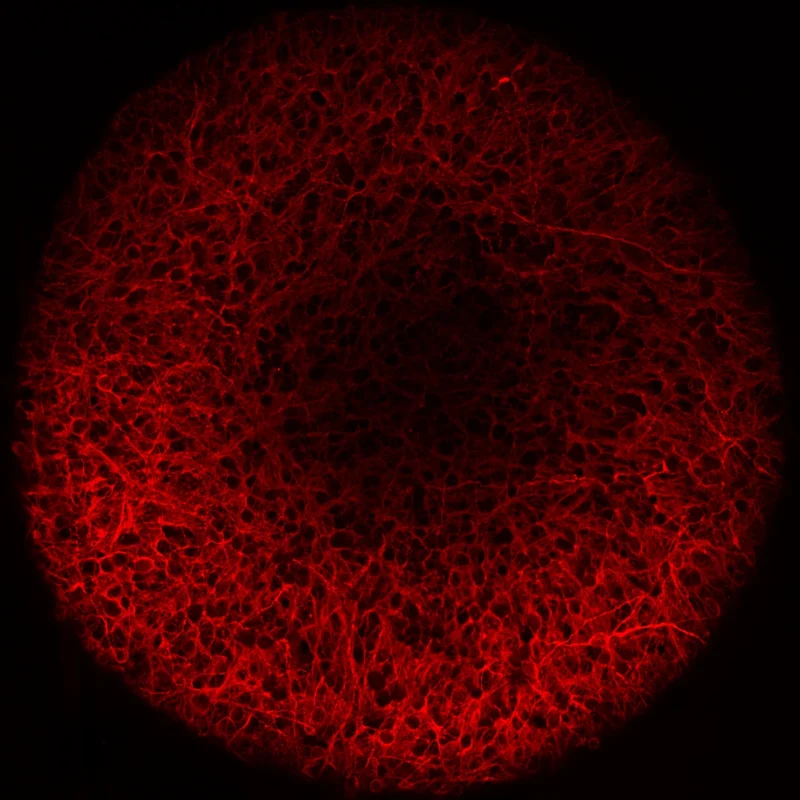
Neurons constantly produce misfolded proteins like TDP-43, APP, and tau. Normally, the lysosome's cathepsin enzymes cut them apart and clear them. Our research asks what happens, and what can be done, when that clearance step fails.
Advanced models, close to the biology of disease
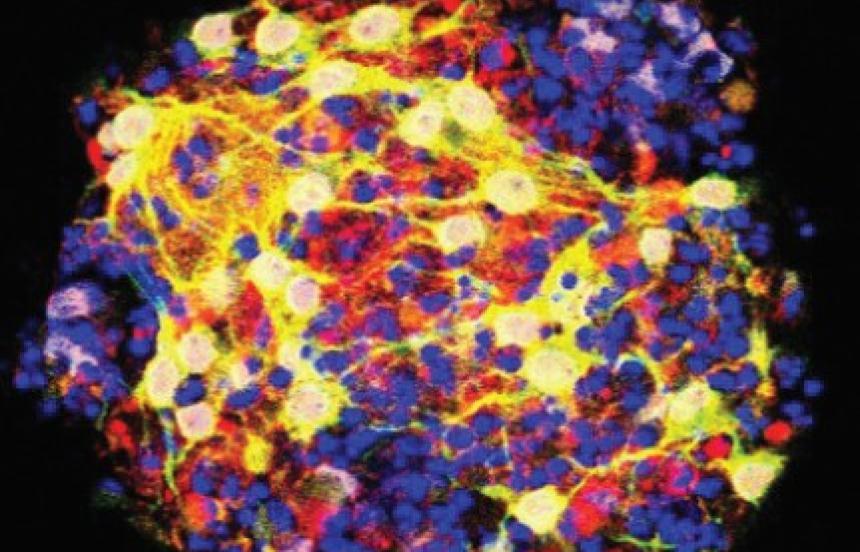
Our research is powered by advanced experimental approaches, in conjunction with biochemical techniques and confocal microscopy for detailed molecular and cellular analysis.
iPSC-derived cortical neurons
Human induced pluripotent stem cell models let us study disease-relevant proteins in a neuron's native context.
iPSC-derived motor neurons
Motor neuron models directly relevant to ALS, used to probe lysosomal dysfunction and protein clearance.
Mature brain organoids
Complex, three-dimensional neural tissue that captures cell-cell interactions a dish alone cannot.
Three diseases, one converging mechanism
The core objective of the lab's work is to illuminate the mechanisms underlying lysosomal dysfunction in neurodegenerative disease and identify promising candidates for therapeutic development.
TDP-43 & the lysosomal proteases
TDP-43 mislocalizes and aggregates in ~97% of ALS and about half of FTD cases. We study the cathepsins responsible for clearing it, and how disease mutations impair that clearance.
APP & cathepsin biology
We mapped over 390 sites where cathepsins cleave APP, and found that degradation is pH-dependent, linked to the less acidic lysosomes seen with aging and disease.
Repeat expansion & brain organoids
Studying the most common genetic cause of ALS/FTD in mature brain organoids and the role of astrocyte-released toxins.
Recent updates
PQLC2 & lysosomal pH
Our new preprint identifies PQLC2 as a regulator of lysosomal acidification and links it to tau homeostasis.
APP degradation & pH
Now published in Molecular Neurodegeneration Advances: cathepsin cleavage of APP is pH-dependent.
Prosaposin & progranulin
Now published in the Journal of Neurochemistry: progranulin regulates cathepsin D cleavage of prosaposin.
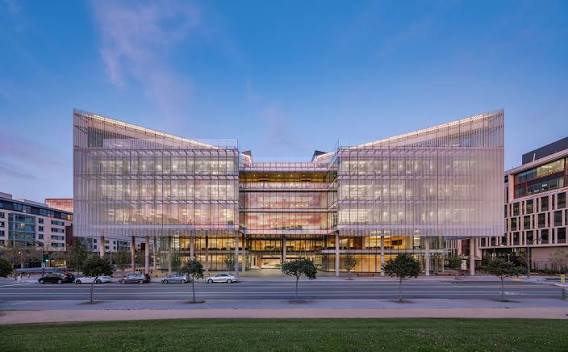
UCSF Mission Bay, San Francisco
The lab is in the Weill Institute for Neurosciences building on UCSF's Mission Bay campus.
1651 4th Street, Room 421A
San Francisco, CA 94158