
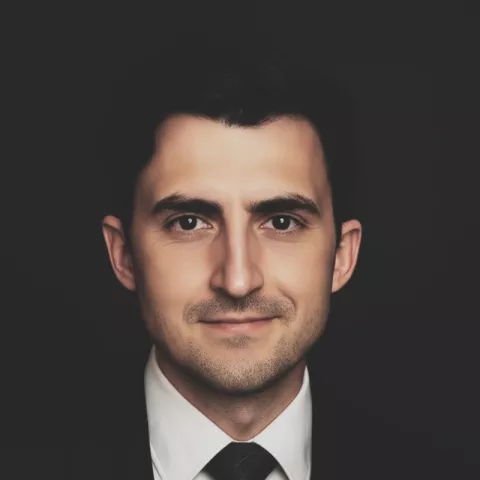
Paul Sampognaro, MD
Paul is a neurologist, physician scientist, and the principal investigator of the Sampognaro Lab. As a neurologist, Paul treats patients with ALS at the UCSF ALS Center and also patients with peripheral nerve and muscle diseases at the UCSF Neuromuscular Clinic. As a scientist, he focuses on the impact of the lysosomal proteases and the autophagy-lysosome pathway in the pathophysiology of ALS and related neurodegenerative diseases. His goal is to develop novel therapies for these conditions.
Paul majored in Neurobiology as an undergraduate at Georgetown University, where he worked as a research assistant in the laboratory of Maria Donoghue, studying the molecular underpinnings of Eph-ephrin signaling and its role in cortical neuronal development. After college, he matriculated to the Johns Hopkins University School of Medicine, where he earned his M.D. and worked part time in Charlotte Sumner's laboratory, quantifying the degree of SMN1 insufficiency in humans with spinal muscular atrophy. At UCSF, Paul completed his neurology residency and his Neuromuscular Fellowship. He then joined the laboratory of Dr. Aimee Kao for his post-doctoral research fellowship, focusing on the impact of TDP-43 mutations and their role in disrupting the function of the lysosomal proteases.
Outside of the lab and the clinic, Paul enjoys playing tennis, walking his dog, Kaya, and spending time with his family and friends.
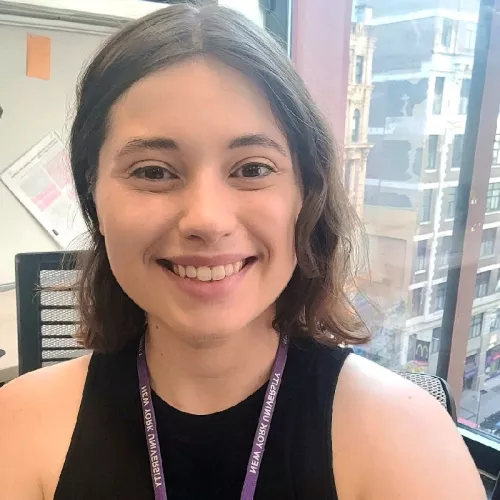
Courtney Clark, PhD
Dr. Clark received her bachelor's degree and her PhD from the University of Tasmania. She is an expert in the development, design, and execution of cell-based studies involving iPSC-derived neuronal cell types, including cortical neurons and motor neurons. She is also an expert in ALS pathology. Courtney joined the Sampognaro Lab in 2025 after moving to San Francisco from New York City. In the lab, she develops iPSC-derived neuron and astrocyte models of ALS and uses them to study how TDP-43 pathology and lysosomal dysfunction interact in disease.
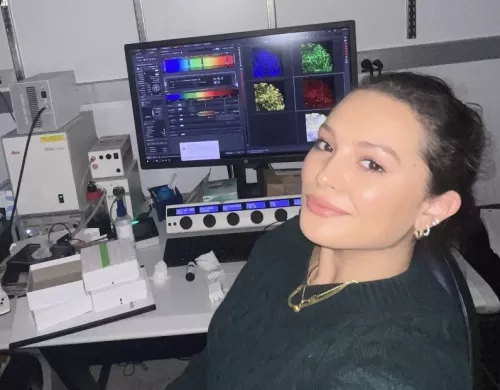
Tara Antee
Tara earned her bachelor's degree in chemical engineering, with an emphasis in biochemical engineering, from the University of California, Riverside, where she studied protease-inhibiting antibodies in Dr. Xin Ge's lab as an NSF-REU. She then studied T-cell engineering in Dr. Yingxiao Wang's lab at UC San Diego and ran a FACS-based CRISPR screen for regulators of translation in Dr. Maria Barna's lab through Stanford's Sarafan ChEM-H/IMA Postbac Program. In the Sampognaro Lab, Tara uses iPSC-derived neurons and mature brain organoids to study ALS. Her current work focuses on how the lysosomal proteases contribute to TDP-43 pathology. She is a co-author on a 2026 study of pH-dependent APP degradation and a 2026 preprint on lysosomal pH regulation.
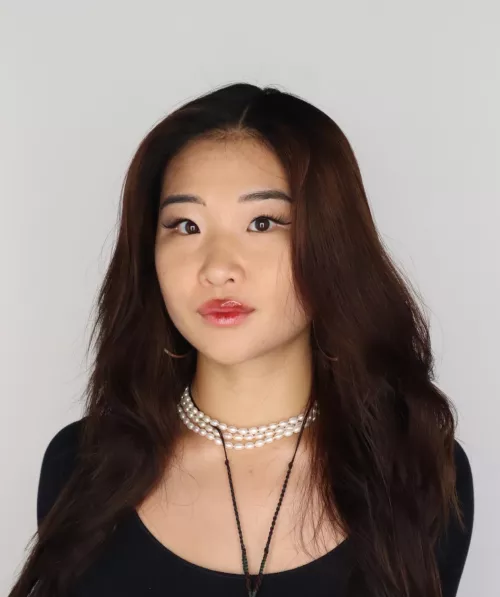
Vienna Gao
Vienna majored in Neuroscience at the University of Southern California, where she also worked as a research assistant in the Dias Lab studying the impact of stress and its influence on mammalian neurobiology. Vienna joined the Sampognaro Lab in 2025. She generates and maintains the iPSC-derived neuronal models the lab uses to study how the lysosomal proteases shape neuronal health in ALS and related neurodegenerative diseases. Vienna is a co-author on a 2026 Journal of Neurochemistry study of how cathepsins cleave prosaposin and on a 2026 preprint identifying PQLC2 as a regulator of lysosomal pH.

Kenton Tsang
Kenton earned a B.S. in Molecular and Cell Biology from the University of California, San Diego. As an undergraduate researcher in Dr. Elizabeth Villa's lab at UC San Diego, Kenton cultured iPSC-derived neurons and neurospheres and optimized fluorescent labeling of ribosomes to guide cryo-electron tomography studies of translational dysregulation in Alzheimer's disease. The project combined live-cell and immunofluorescence microscopy with correlative light and electron microscopy, and Kenton adapted Python and Fiji scripts to quantify the imaging data. Kenton presented this work at UC San Diego's 2026 Undergraduate Research Conference and also served as a learning assistant for an upper-division physical biology course.
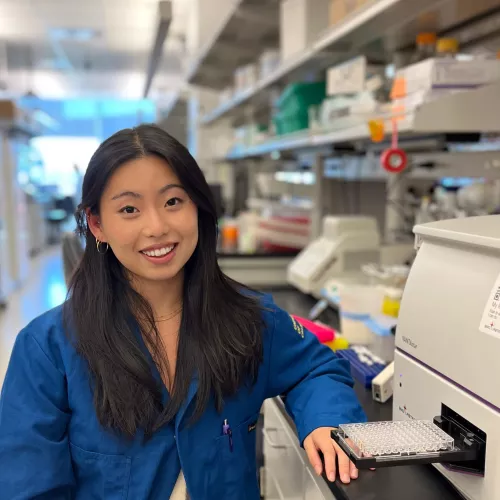
Zoe Liau
Zoe majored in Human Biology at UCLA, where she also worked as a research assistant in the Castel Lab studying memory and emotion. Within the Sampognaro Lab, her focus was investigating the role of APP and its complex interaction with the lysosomal proteases, and studying the cathepsins as potential therapeutic targets in ALS. Outside of lab, she enjoys hiking, cafe hopping, and working through the daily crossword with friends.
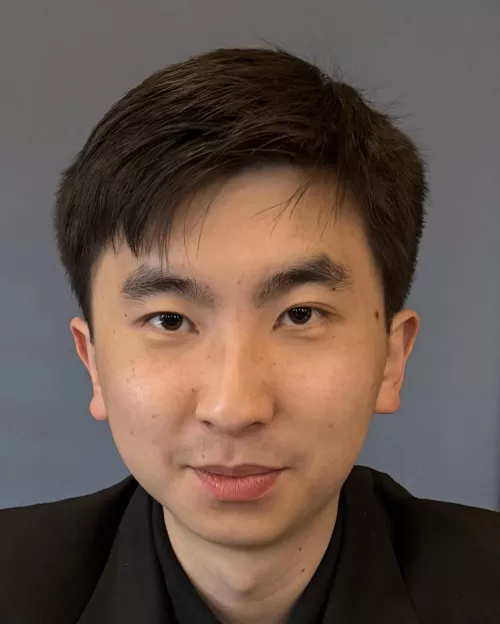
Michael Han
Michael was a senior undergraduate majoring in Human Biology, Health & Society at Cornell University. Within the Sampognaro Lab, his focus was on investigating the mechanisms of C9orf72-associated neurodegeneration.